
We live in an age where psychological language has morphed into cultural weaponry. Terminology once confined to clinical settings now features widely on social media. Gaslighting. Trauma bond. Toxic. Boundary violation. Narcissistic abuse.

A measure of psychological literacy can be liberating. Naming real harm matters. This is not a denial that abuse and personality disorders exist. But when clinical language designed to classify behavior slips into everyday conflict and becomes a tool of moral superiority, it robs us of dignity and thwarts growth.
Words meant for diagnosis are now used to wound and polarise. I’m over it.
I say this as a clinician and as someone who has watched these terms harden hearts and divide families.
Labels Reorganise Reality
Psychological labels are seductive in their simplicity because they offer quick relief from emotional discomfort. They’re soothing in same way a pacifier comforts an upset infant. Relief, however, is not insight, it is sedation. The very mechanism that soothes us is also the one that reshapes our reality.
In this blame and cutoff culture, when we reach for a popular label, three predictable shifts occur. It’s a pattern I call D.O.T.:
D — Distort
Labels distort the inherent complexity and ambiguity of real life because simplification feels better.
O — Obscure
Labels obscure reality by pulling us into a world where moral certainty replaces curiosity.
T — Transfer
Most seductively, labels transfer responsibility outward, allowing blame to eclipse self‑reflection while asserting moral superiority. This preserves self-image but hinders mature development.
Assigning a label may feel good in the moment, but in the process of discharging emotional discomfort, we also distort truth.
The moment we name someone narcissistic, toxic, or abusive, the mind shifts from curiosity to confirmation. We stop gathering data and start collecting proof. It’s an easy exit.
Cognitive psychology calls this confirmation bias. Once a label has been assigned, our perception reorganises around it. Questions are seen as interrogation. Kindness reads as manipulation. Silence becomes suspicious.
A label is a blunt instrument.
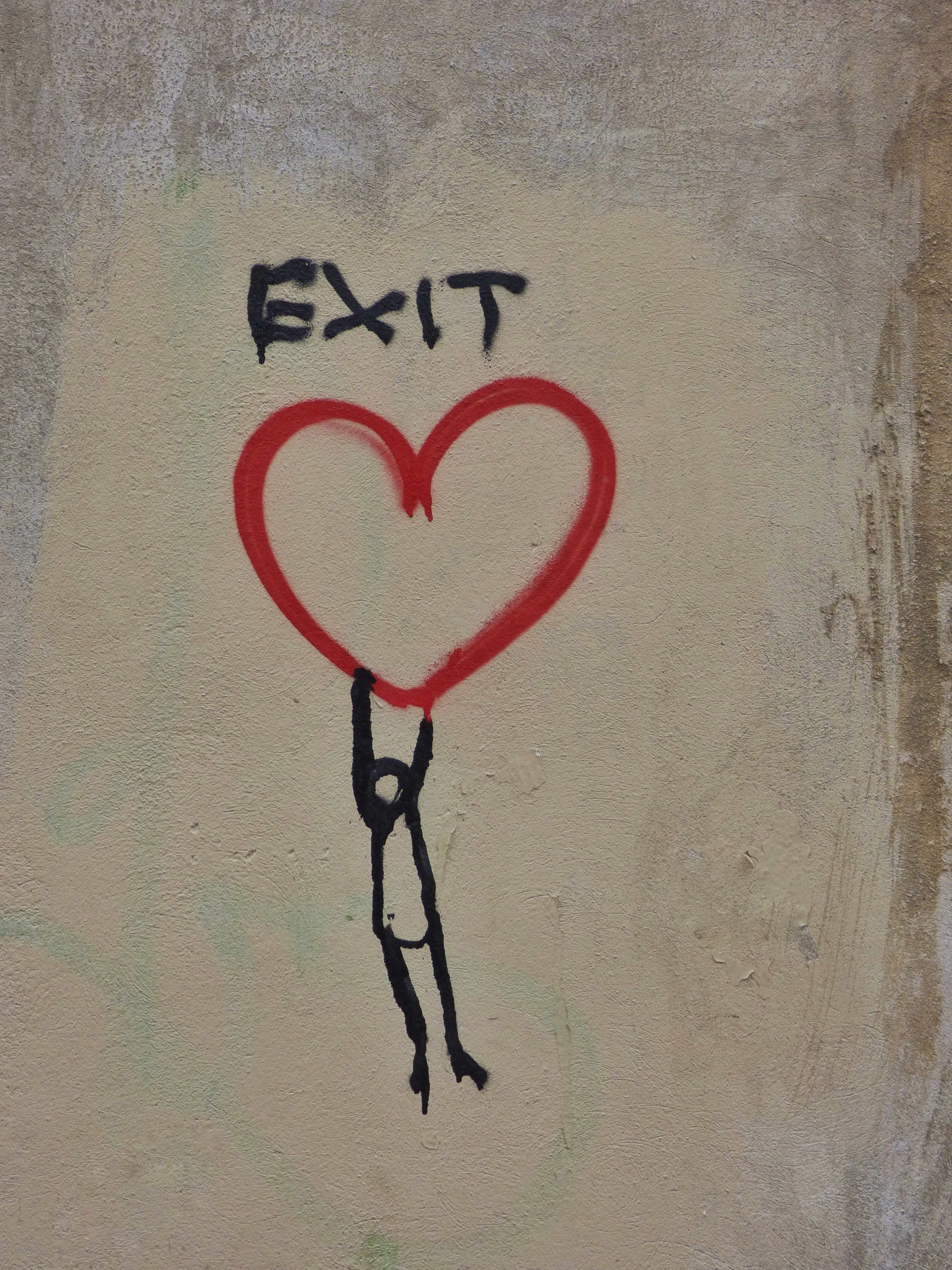
It places a “DOT” over a person and freeze-frames identity.
The Real Danger
Inside families, distortion multiplies. When a parent is labeled a narcissist, the child positions him/herself as the victim. Every exchange is then filtered through the limitations of that lens, stripping away relational context, history, and nuance.
Additionally, when we label another, we fix ourselves in opposition to them.
-
If they are disordered, we are sane.
-
If they are narcissistic, we are empathic.
-
If they are abusive, we are virtuous.
Labels feel clarifying, but in the context of everyday communication, they become moral podiums and weapons of division.
Labels slam the door on human reciprocity and ignore the living system between people. Human dynamics are co‑shaped over time through tolerance, fear, attachment, and repetition. When we reduce the system to pathology, we surrender personal agency.
And therein lies the real danger. When “the problem” lives entirely in the other, growth cannot occur until they change.
Blame externalises power. Responsibility restores it.
Labeling Dehumanizes
When assessed with care, a psychological diagnosis is meant to describe patterns of impairment across contexts. However, in popular use, clinical terms have become identity assignments used as a personal attack: You’re a narcissist. You’re an abuser. Not, You behaved selfishly. Not, That hurt me or This behaviour upset me and I’m struggling.
When we label, we stop being curious and asking relational questions:
-
What is happening in this moment?
-
What context shaped this interaction?
-
What is my part in this dynamic?
-
What am I unwilling to see about myself?
The Human Cost of Therapy-Speak
Research in social psychology and cultural studies suggests that as therapeutic language permeates mainstream culture, ordinary relational conflict is increasingly interpreted through clinical frames.
When clinical terminology becomes the default lens, everyday human flaws are reframed as dysfunction. Tolerance narrows. Resilience erodes.
At the same time, rates of anxiety, depression, and loneliness have risen over the past decade despite unprecedented access to therapy content and mental health discourse.
Awareness alone does not produce resilience and language itself does not deliver accountability. Therapeutic terminology without responsibility entrenches grievance.
Blame may feel emotionally satisfying, but it is also a form of resistance.
And what we resist keeps us entangled.
If “They” Are the Narcissist, Who Are You?
Honestly, I’ve had enough of clinical name-calling. Because here’s the big question that never makes it into my Instagram feed:
If “they” are the “narcissist,” who are you in that dynamic?
Relational systems are reciprocal. They are co-created. Decades of research in family systems and attachment theory show that certain traits organise together. Narcissistic traits often cluster with complementary patterns: over-functioning, rescuing, appeasing, tolerating, hyper-empathising.
There’s a term for that pattern too. It’s called codependency—a term that stems from more than 30 years of mid 20th-century addiction research. It is used to describe a pattern marked by weak boundaries, an identity built around fixing others, a high tolerance for mistreatment, and a fear of abandonment.
Now notice the asymmetry. “Narcissist” is an easy, blame-oriented attack, but the term “codependent” demands a mirror. One locates pathology in the other. The other demands self-examination.
Victimhood Versus Agency
There is real harm in this world. Real cruelty. Real abuse. But in recent years, there is a cultural drift toward organising one’s identity around injury. When the “narcissist” becomes the anchor of our story, our “victimhood” is the counterweight.
And although victimhood may explain the past, it cannot build the future. To live permanently from what was done to you is to surrender the larger arc of your agency. It locks us in perpetual childhood.
The problem is not therapy. The problem is therapeutic language untethered from responsibility. It is easy to speak fluently about trauma while avoiding the tougher questions:
-
Why did I stay?
-
What did I tolerate what felt familiar?
-
What did this dynamic protect in me?
-
What was I too afraid to look at in myself?
-
Who or what am I protecting?
Growth does not come from winning the diagnostic argument. It comes from holding the paradox and plurality of the human condition and reclaiming your part. This is not victim-blaming. Healing begins where agency is activated.
Power versus Pathology
Which statement holds more personal power?
You are a narcissist and your actions hurt me.
Or:
I was hurt by what happened between us, and I am responsible for my healing.
One locates pathology externally. The other locates agency internally.
Blame may feel righteous in the moment, but it tethers your future to someone else’s behavior. On the other hand, responsibility acknowledges pain without surrendering power.
The next time “narcissist” or any other label rises to your lips, pause a moment to ask a few critical questions in service of personal sovereignty.
-
What part of this dynamic belongs to me?
-
Am I using this label to understand someone’s behaviour or to blame them?
-
Will this label ultimately repair the relationship or create more division?
-
Who benefits from me using this label?
Because labels—in their exquisite simplicity—distort the truth and separate us from ourselves and each other.
Labels reduce us. Responsibility matures us.
From Blame to Agency with CORE
As a clinician, a mother, a wife, and a friend, I refuse to see the people I love—even in their pain—as powerless objects defined only by what was done to them.
I see complexity. I see resilience. I see the capacity to integrate a difficult past without being reduced by it. That is not denial of their suffering. It is faith in their strength. It is a refusal to collapse a human life into a perpetual wound.
I will not promote a culture that prefers pathology over personal responsibility. If we are serious about healing—in ourselves, our families, and our society—we need less diagnostic shorthand and more moral courage. The courage to look inward when accusation feels easier, to tolerate nuance when simplification soothes, and to release blame in favor of agency.
Responsibility yields sovereignty. It restores dignity because it restores agency on both sides of the dynamic.
In this culture of blame and victimhood, I advocate for personal responsibility using a model I call C.O.R.E.:
C — Curiosity over certainty
Instead of diagnosing and labelling others, we can choose inquiry. Curiosity can reduce temporary relational discomfort by replacing moral certainty with curiosity. We can stop to ask, What is actually happening here?
O — Ownership over accusation
Agency begins with ownership, by clearly seeing and owning our place in a dynamic system. Ownership begins by saying: Whether I like it or not, I have a part in this.
R — Reciprocity over righteousness
When we recognise that relational systems are co-created, even when dysfunction exists. Human dynamics form in interaction, not isolation. Reciprocity begins by asking: In what ways might I be contributing to this dynamic consciously or unconsciously? What part of this belongs to me?
E — Evolution over entrenchment
When we choose growth over grievance, we mature. By refusing to freeze ourselves or others in a single narrative, we allow for the complexity of the human condition to emerge and take shape. Evolution invites us to ask: Am I committed to being right or to becoming wiser? What would repair require from me?
Beyond Labels
If I hear the word narcissist one more time, I might scream because it’s easier to blame than it is to heal. When clinical terms meant for careful diagnosis become cultural shorthand for pain, they replace courage with certainty and attack identity.
I see it this way: we can keep shrinking one another into diagnostic labels, or we can choose the harder, braver path back to our C.O.R.E. where curiosity tempers certainty, ownership replaces accusation, reciprocity restores balance, and evolution matters more than being right.
Dysfunction may be part of the human story, but it does not have to assign the final identity. Dignity is not reclaimed through labels. It is reclaimed through personal responsibility.
I’m curious about your experience diagnostic labels in everyday conversations. How do they land with you?