
The woman sitting before me is intelligent, competent, well-educated, and financially independent.
She appears to have a solid career. Her children are from a previous relationship. She doesn’t rely on her partner for money. Although there is no overt physical abuse, she admits feeling intimidated and is often fearful of his temper. There isn’t a single crisis she can point to. Just a slow erosion of self confidence from years of her partner’s relentless criticism, emotional absence, and the dull ache of feeling unseen and alone in their relationship.
Deep down, the woman knows the relationship is unhealthy and staying may permanently damage her relationship with her children. Yet she also feels a deep responsibility to make the relationship work. She knows her children feel the tension, but disrupting the household with a breakup feels like that would harm the children too. She can articulate all the reasons she should leave, yet she feels unable to muster the courage to do so.
It’s not that the woman lacks resources, insight or strength.
The reason the woman can’t seem leave is a matter of misalignment.
For more than a century, psychology assumed that conscious awareness precedes action. If we could just understand our issues clearly enough and harness enough motivation or willpower, we would initiate and sustain changes in our lives.
But the truth is far more complex and still evolving.

Why awareness isn’t enough
In his 2006 book, The Happiness Hypothesis, social psychologist Jonathan Haidt offered an elegantly simple way of understanding the friction between the conscious and unconscious parts of the mind. Haidt suggested change is difficult because the human mind is like a Rider sitting atop an Elephant.
The Rider (conscious mind) is rational, articulate and knows where it wants to go. But the Elephant (unconscious mind) is an emotional beast that’s often difficult to reason with and immensely powerful.
In the woman’s case, her Rider says, “This relationship is damaging. I need to leave.” But her Elephant won’t budge. Deep down, it senses “leaving may be dangerous.” No matter how motivated the Rider is to go, the elephant won’t cooperate. Guess which one wins?
But there’s another, often less discussed element of the Elephant and the Rider story.
Long before Chip Heath and Dan Heath published Switch: How to Change Things When Change Is Hard in 2010, psychology had already exposed the decisive role of environment in shaping behavior. Studies of U.S. soldiers who used heroin during the Vietnam War found that the vast majority stopped using after returning home, with only a small percentage meeting criteria for continued dependence within the first year. Same men. Different environment.
When the contextual cues that sustained the addiction disappeared, the behavior largely lost momentum. The implication was clear—change the setting, and behavior often shifts without a force on willpower.
But understanding the role of the external environment — the Path of the Elephant — doesn’t complete the picture. There’s another element that is far more difficult to discern and one that is still emerging in research.
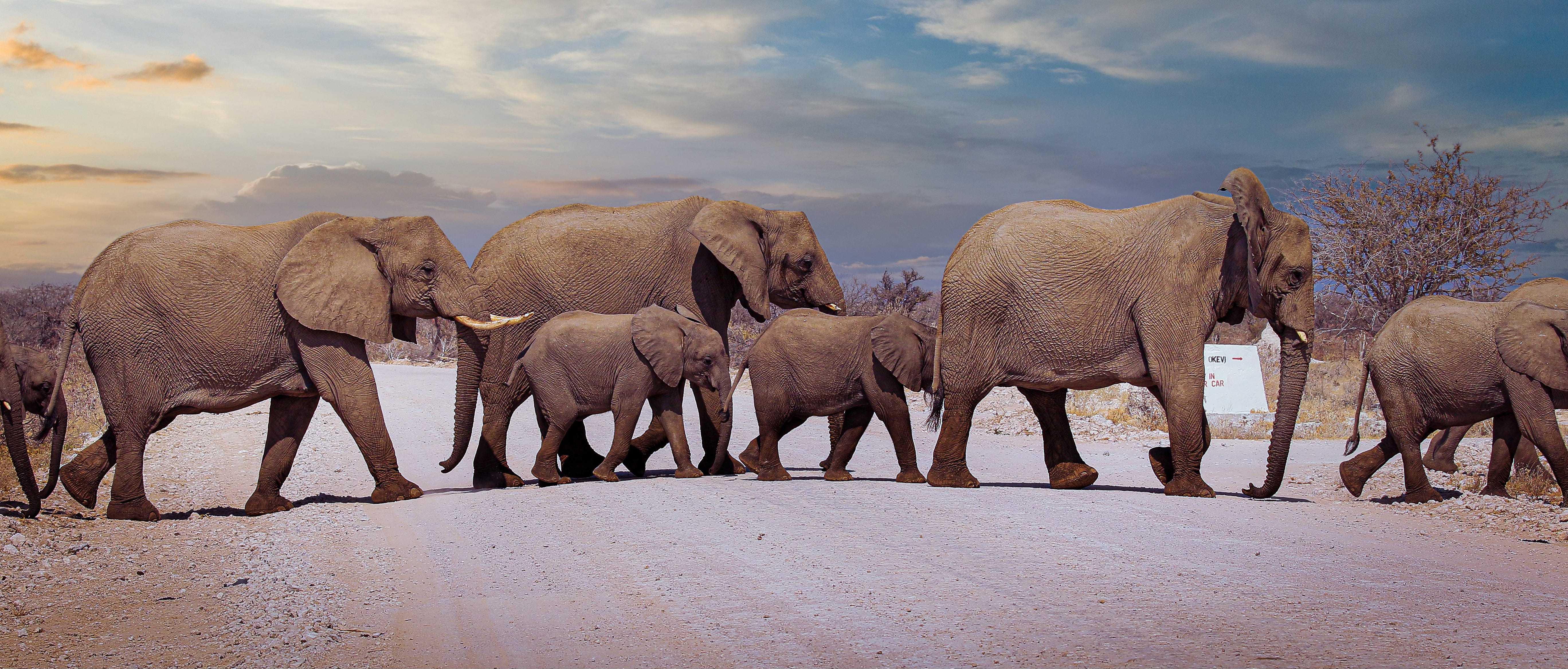
Inside the “herd mind”
We don’t just live in environments. We internalise them.
By this, I mean our attachment patterns, family loyalties, cultural narratives, emotional conditioning become the portable ecosystems we carry throughout our lives. Our nervous systems bear the weight of our internal foundations. This is why a woman can leave a toxic relationship yet recreate similar dynamics elsewhere. Her external environment may have changed, but her internal landscape (socio-emotional conditioning) hasn’t shifted. The pattern continues.
Clearing obstacles from the Elephant’s Path doesn’t override the Elephant’s wiring.
What looks on the surface like the Elephant’s irrational resistance is often invisible systemic loyalty. The frightened part of the Elephant is not weak. It is faithful to the herd.
Buried deep in our nervous systems are the inherited survival codes shaped across generations. These embedded beliefs and reflexes were formed in the herd long before the Rider entered the picture.
Navigating the invisible
This is where Family Constellation Therapy, developed by German psychotherapist Bert Hellinger, enters the frame.
Rather than working with the Rider or bulldozing the Elephant’s Path, this work engages the part of the Elephant that intuits danger. It reveals the invisible internalised terrain still being navigated, such as attachment ruptures, exclusions, inherited grief, and unconscious identifications.
The imprint of the herd mind.
The Elephant’s paralysis is rarely about the present choice. It is about belonging, survival, and coherence within a larger emotional field.
Family Constellation Therapy interventions function at the nervous system level. When hidden loyalties are acknowledged, the nervous system recalibrates. What once registered as connection-threatening begins to lose its charge.
Transgenerational research increasingly supports what systemic clinicians observe—that stress responses and relational templates echo across generations. Belonging is encoded in the nervous system as survival. From this perspective, the woman’s staying makes sense. Leaving can unconsciously register as systemic betrayal. In a deeply unconscious layer, the woman described may feel a loyalty to a mother who endured an unhappy marriage, a grandmother who sacrificed her happiness for the sake of her children, a lineage of women organised around survival through persistence.
Change, then, is not a simple behavioral decision. It is a renegotiation of identity and unconscious systemic loyalty.
Approaches such as Family Constellation Therapy highlight the need for unresolved emotional imprints to be metabolised, not merely understood. Insight alone is insufficient for change. The body has to “feel” safe enough first.
To want to move, the Elephant must experience that forward movement doesn’t mean annihilation—that love, identity, and systemic belonging can still remain intact.
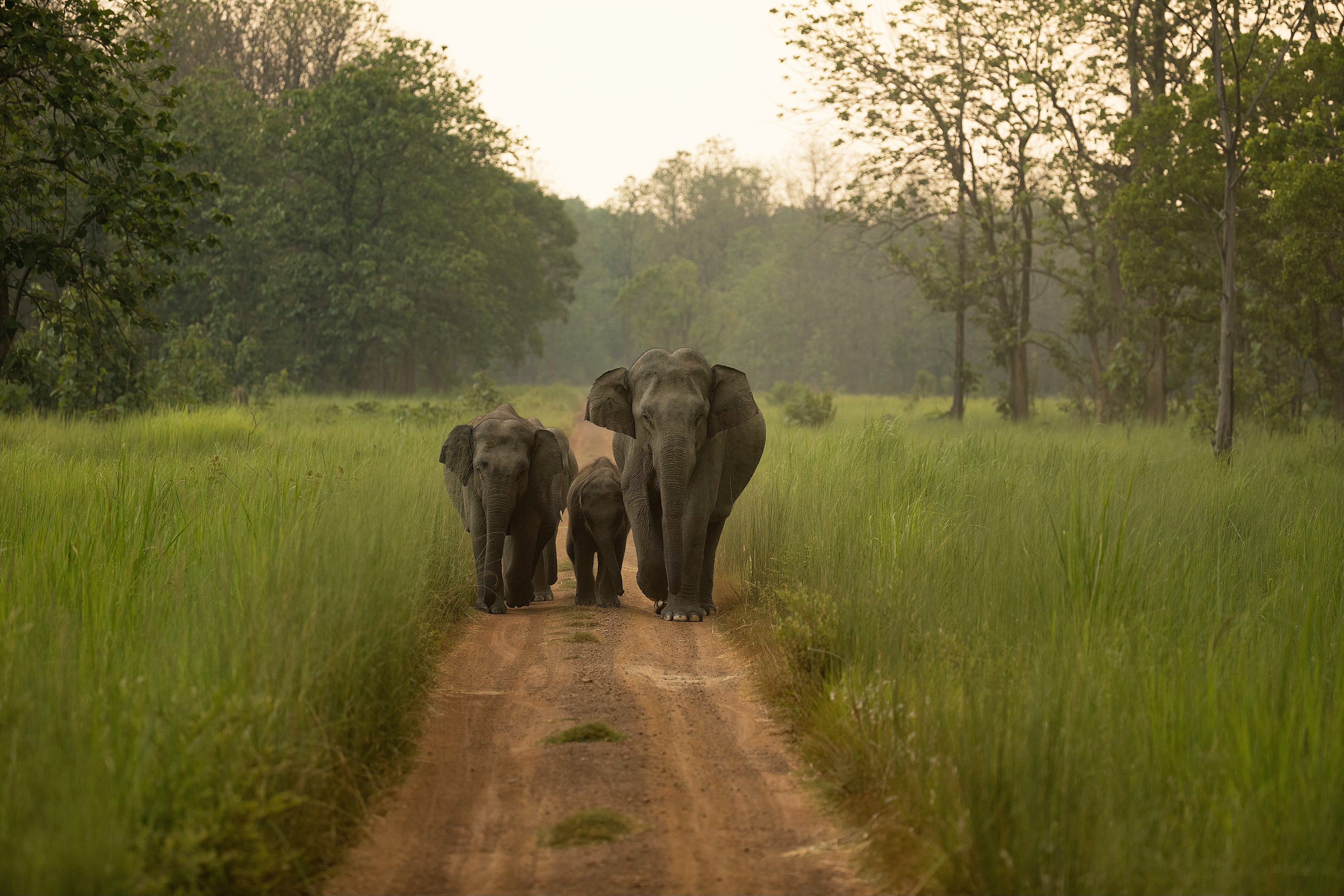
The unconscious risk: exile from the herd
Because human systems are wired for survival, attachment is prioritised over optimisation. The Elephant’s brain doesn’t ask, “Is this relationship fulfilling?” Itt asks, “Where will I belong if I leave?”
When satisfaction, safety, and security unconsciously register as betrayal—of family history, vows, identity, or tribe—the Elephant will resist, regardless of how may sticks the Rider beats it with or the size of the carrots the Rider tries to feed it.
We are quick to diagnose hesitation as weakness. We call it fear. Avoidance. Codependency. Lack of boundaries. But what if, beneath the surface, hesitation is a kind of living intelligence?
What if stuckness is the nervous system calculating risk at the level of belonging?
Six tons of resistance doesn’t lack insight. It hesitates because something fundamental to life feels threatened. Leaving threatens loyalty to family history, to identity, to the herd.
The woman in this story isn’t an anomaly. She’s an illustration. Her struggle reveals something universal.
What we call “stuck” is often the nervous system calculating the cost of exile.
By shifting the question from “Why can’t the woman leave?” to “What does leaving cost her?”, her paralysis makes sense. Resistance is an invisible form of love internally coded as unconscious loyalty to a pattern of suffering.
Force versus coherence
Real change isn’t about gathering courage or pushing harder. It is about coherence.
The Elephant doesn’t need more pressure. It doesn’t need snacks for the journey. It needs to feel safe enough to set out.
When hidden loyalty is acknowledged rather than denied, movement stops feeling like betrayal. Behavior shifts with less force when cognitive clarity, emotional integration, and systemic realignment converge.
By honouring the family systems we come from rather denying their significance, the nervous system relaxes and reorganises. Our inner alarm quiets. The path forward no longer feels like exile. Change becomes possible through discovering you can honor where you come from without repeating it. And the moment your nervous system believes you can grow without losing love, movement becomes possible.
Reflection
Take a moment to consider your own forms of resistance.
-
Where are you trying to discipline yourself into change while something deeper is quietly pushing the brakes?
-
What decisions have you framed as procrastination, weakness, or fear? If you look beneath the surface, might there be a hidden loyalty outside your present awareness?
-
If you made the change you say you want — left the job, set the boundary, ended the relationship, made more money, spoke your truth — who or what would it threaten? Whose expectations would you disrupt? What version of you would have to die? What unspoken family rule would you break?
-
What part of you is afraid that moving forward will cost you your place in the herd?
Perhaps instead of asking, “Why can’t I just do it?” try wondering, “What am I protecting?”
You may find that beneath your frustration lies deep devotion and beneath the paralysis you may find love.
As always, I’m interested to know what you think. Leave a comment and let me know.